Welcome To The Deuce

Saturday, October 9, 2010

Accident (2009)


Hong Kong cinema has always been blessed with master craftsmen when it come to action, yet the pool started to run dry towards the millennium as the industry moved towards more audience friendly material and teen action films. However, there has been resurgence in violent Hong Kong films in the wake of Infernal Affairs and director Soi Cheang is the man responsible for one of modern Hong Kongs finest pieces of CAT III mayhem; Dog Bite Dog. It’s the no-holds barred shot of nihilism that hadn’t been seen since the late 80’s / early 90’s efforts but with the maturity and intelligence of modern Hong Kong films inspired by the success of Infernal Affairs. Needless to say it made him a man worth keeping an eye on.

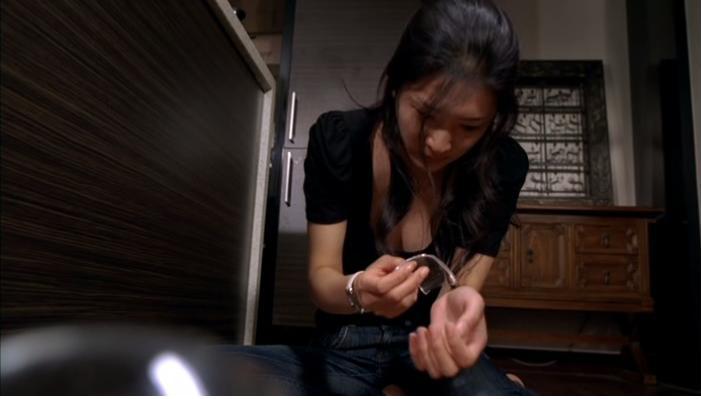
His latest effort, Accident, couldn’t be more removed from the explosive violence seen in his career launcher but it’s an interesting change of direction for the talented director.  A group of professional assassins, lead by The Brain (Lois Koo), specialise in making their hits appear as accidents. When a job goes awry, he starts to question those around him and believing his identity has been compromised he sets out to find who set him up.
Accident is a pleasant surprise, a refreshing and excellently execute thriller that relies more on its overall story than just providing us with some thrilling set-pieces. Under Johnnie To’s production Soi Cheang has created a lean, tense and surprisingly powerful slice of Hong Kong cinema. The ‘accidents’ are elaborate and effective; imagine if you can Final Destination directed by Dante Lam and you’re on the right track. The first half of the film contains two thrilling set-pieces that really impress and leave you gripped as to where the film will take you, and that’s the films biggest plus-point; it’s unpredictable.


The second half resolves around The Brain’s obsession with finding out who set him up, it’s an all engulfing desire that eats him up and we see the once methodical assassin become sloppy as he descends deeper into his obsession. This half is slower than the first, but the tension is built beautifully and leads to a powerful and shattering finale. The film does require some suspension of belief during the finale, but I bought right into it and it proved to be a fantastic addition to an already overly impressive feature.


Louis Koo also left a positive impression on me, he shows a great deal of maturity as an actor here and as he’s in almost every frame of the film it’s integral that he got it right; and he does. The Brain is damaged goods, but Koo shows us the sensitive side to this cold-hearted man that gains our sympathy. We care for him, and we get caught up in his hunt for the truth, and this is the films greatest trick; making us believe what he believes and having us side with him and sweeping us up in his obsession.


Soi Cheang and Johnnie To have crafted a wickedly fresh little thriller here that shows the Hong Kong cinema has more tricks up its sleeve and continues to produce gems like this on a yearly basis; oddly enough Johnnie To tends to be involved in most of these titles! He’s like a one-man hit factory that continuous to impress at a staggering rate. For those disenfranchised by some of Hong Kong’s recent output, you owe it to yourself to check this out.


There’s no UK release as yet, but you can buy the Hong Kong DVD here.

Tuesday, October 5, 2010

The Evil Dead (1981)


There are few films with a reputation as notorious as Sam Raimi’s debut, The Evil Dead. One of 80’s cinemas’ most cherished horror movies to have survived and flourished the slanderous allegations of corruption and obscenity launched at it by the Director of Public Prosecutions (DPP) who granted the film immortality by making it an official Video Nasty during the video age in the mid-80’s. Thirty years later and it’s now considered a bona fide classic by not just genre fans but by mainstream critics alike. It’s also been given a swank Blu-ray release courtesy of Sony Pictures. Oh how times change. To think that the distributors of films of this ilk once got sent to prison…

The story is a familiar one nowadays, but just in case. Five friends head off into a cabin in the woods for a fun-filled weekend but are attacked by demonic forces that live within them!

Simples.

The one aspect that seems to have been lost on most audiences these days is the fact that the original Evil Dead is actually a horror film. Due to the comedic influence that found its way into the sequels, the franchise now has a comedy-horror tag that isn’t deserved for the original. Granted, there are shades of intentional humour within the original, but it’s superseded by the unintentional laughs those will find when faced with the evident budget limitations in the effects department – The monsters seem to turn into mash potatoes! Granted, there’s a ‘eww’ factor to the proceedings, but most will just chuckle at the over the top grossness of the situations now.


Where the film does drive home its horror origins, is in its balls to the wall aggression. This was made in a period where no-name actors filled up the screen and the clichés didn’t yet dictate who would be left standing come the finale, if any. It’s also made from a period where directors liked to punish their cast, and director Raimi certainly pushed the envelope in that regard here. Tree’s attack and even rape their victims, Achilles tendons are annihilated by pencils in agonising close-up and axes are used to dismember loved ones but to name a few of the classic moments.


How does a film of this vintage, not to mention the budget restraint, hold up with the transfer to hi-definition? Luckily for us, marvellously! Of course this film was never going to look like the latest Hollywood flop-buster, and why would we want it to? This is a down and dirty picture and always has been, but it’s never looked this strong. Grain is evident but not to distracting levels, like certain releases of cult films have been on Blu-ray (I’m looking at you Stendhal Syndrome), and it gives the movie a pleasing filmic look and the sounds are cracking; some slight crackle remains but it’s nice that the films hasn’t been destroyed by the falseness of computers seeing as it was created by old school visual and sound equipment – on a shoe string – and has never sounded, or looked, polished. Those wary of the 1:85 aspect ratio need not to worry as the film has been re-framed under approval from Sam Raimi himself, and it looks great.


And now we get to the extras. There are plenty of extra’s here that have popped up on the numerous DVD incarnations of the film, but the big inclusion here for the new Blu-ray is a spanking new commentary by Rami, Bruce Campbell and Robert Tapert. The real joy though is the picture-in-picture feature that sports recollections from various horror icons from the likes of Brain Yuzna and Stuart Gordon to the likes of Alexandre Aja! It’s a brilliant addition to a must-have Blu-ray for cult fans and Evil Dead fans alike. Good work Sony! Let’s hope we see this loving treatment given to more cult gems shall we?

Full list of extras on this release are as follows:

  • All New Commentary with Sam Raimi, Rob Tapert and Bruce Campbell
  • Picture-in-Picture: Join us! The Undying Legacy of The Evil Dead
  • One By One We Will Take You The Untold Saga of The Evil Dead
  • Treasures from the Cutting Room Floor
  • At the Drive-In
  • Discovering The Evil Dead
  • Ellen and Drama Teacher
  • On-Stage Interview
  • Make-Up Test


Treat yourself to The Evil Dead on Blu-ray as of the 11/10/2010!

Modern Masterpieces #4: Dark Water (2002)


When Hideo Nakata released The Ring back in January 1998 and Park Ki-hyeong released Whispering Corridor’s months after, in May 1998, the then stale horror genre was resuscitated with a fresh breathe of life. America had all but bled the slasher revival dry and audiences longed for something different, and these films were just that. Masked knifemen no longer held sway over an audience, but dead women with long, straggly black hair obscuring their face? Guided by some malevolent supernatural force? Time to rejoice! As “shit-your-pants” horror was back!

The success of these movies soon brought with it its imitators: which to this day still proves popular with audiences. However the finest example of the sub-genre wasn’t Hideo Nakata’s first foray, or even Park’s groundbreaking Korean shocker, but the subtle horrors of Nakata’s later effort, Dark Water that encapsulated everything oriental horror was, and should have always been – the perfect mix of being, dramatically, achingly beautiful along with nerve-wrenchingly terrifying.

Taking inspiration once again from Koji Suzuki (ala The Ring) Dark Water tells the story of Yoshimi, a middle-aged mother currently fighting for divorce and in order to maintain custody of her daughter, Ikuko, takes a menial job as a proof-reader. They have also just moved into a run-down apartment block which has more than it’s fare share of maintenance issues; such as the ever growing damp patch in their ceiling which stems from an abandoned apartment above them. Soon, strange occurrences abound and an apparition of a young girl keeps haunting Yoshimi. It transpires that a young girl, Mitsuko, had gone missing in the area the year previous, after she was abandoned by her mother, but why is she targeting Yoshimi and her daughter and how can they stop her?


As much as I loved The Ring upon initial viewing, it’s never drawn me back for repeat viewings. The mystery of the first experience can never be re-lived and as a result repeat viewing can lead to boredom, while waiting for the characters to finally unravel the Sadako mystery and we can enjoy the now legendary finale. Dark Water however, continues to grip and scare the living shit out of us. This isn’t because Mitsuko is the more terrifying creation, Sadako has her beat hands down aesthetically, but her story is more appealing and relatable.


Mitsuko is a tragic creation, born from parental abuse she thrives to claim back what she lost. Whereas Sadako was an enigma, of sorts, in the first Ring movie; murdered by a parental figure and lashing out with a teen-like angst – granted in the book she benefits from the added perversity that’s lacking from the Japanese movie adaptation and suffers for it, however the South Korean version contained this aspect but failed to maintain the scares - and it gives Sadako an air of bratishness as opposed to monster. Dark Water’s Mitsuko however, is a lost child and as such gains or sympathy, which makes it all the more horrifying in that we can understand why she’s still clutching to this world, hoping to find her mother and return home to her.


Though the American re-make has all but tarnished the films name and reputation, I still believe that Dark Water stands head and shoulders over its rival, more successful, genre brethren. It’s one of Japanese horror cinemas finest offerings and as far as the ghostly, dark haired ghost cliché goes, this is the best the Far East has given us. It may not have the body count that horror fans and gorehounds crave, but it’s a film dripping with suspense, leaking with tension and has a fantastic gut-punch finale that will leave its audience affected in a way The Ring and Ju-On franchises could never come close to achieving. You may also find yourself disturbed by Mitsuko’s cold-hearted, calculated determination to claim what she wants, showing a maturity far beyond her young age; leaving you remembering her long after you’ve forgotten Sadako’s pissed at the world, woe is me schoolgirl attitude. This is a special stuff indeed. Highly Recommended!


Dark Water is available to buy on DVD now.

Monday, October 4, 2010

Beautiful (2008)


Kim Ki-duk has always shown a questionable attitude towards women in his movies, which tends to be blown way out or proportion with the majority of his critics; seeing as men are portrayed in a worse light in the films that are blasted as misogynistic. However, he seems to have out Kim Ki-duk’d himself with Beautiful, a film so bleak and misanthropic that it’ll leave most viewers as suicidal and depressed as the characters within the film! It’s also one of the finest slices of idiosyncratic cinema to come out of South Korea since Kim’s Bad Guy.

Eun-yeong (Cha Soo-yeon) is haunted by her beauty, men can’t resist her and woman won’t trust her. The unwanted attention she receives from men reaches it fever-pitch with Seong-min (Kim Min-soo), a stalker who can not control himself around her and violently attacks and rapes her when she refuses his flowers. Destroyed after the incident, Eun-yeong tries to ruin her looks by gouging out on junk food in a bid to become ugly. When this doesn’t work she changes tact and refuses to eat and doesn’t stop working out, eventually forcing anorexia and bulimia upon herself. A policeman, Eun-cheol (Lee Chun-hee), watches as this woman slips further down a spiral of self destruction and eventually becomes obsessed with her.  As her behaviour becomes increasingly more erratic and violent, he decides to take action.


As you can tell from the premise, not much happiness abounds in Beautiful and it’s a better film for it. Not many films are this hell-bent on destroying its audience. This rivals Kim’s previous effort like Bad Guy, Address Unknown and The Isle in the nihilism stakes but also manages to be thoroughly engaging; especially with the performance turned in by lead actress Cha Soo-yeon, which is truly devastating. Lee Chun-hee also proves a quality counter for Cha, whose mental deterioration isn’t as devastating but is equally as disquieting. As the finale once it arrives, it’s a triple-whammy of gut punches that will shock, astound and have you applauding for the sheer balls of the filmmakers or will leave you completely ruined and in need of a hard drink.


This brazen style of filmmaking is what attracted me to Kim Ki-duk, and it’s been lacking in his movies since The Bow. It’s great to see other filmmakers tackling his material and when a talent as bold as Jeon Jae-hong is behind the camera; it’s a privilege to watch the film, and characters, unfold regardless of how dark the film gets. This is cinema at its bleakest, this doesn’t mean its unwatchable but it certainly powerful enough to leave you haunted after watching, those in a frail state of mind should avoid this like the plague until they’re ready to go where the film dares to take them. It’s not a pretty ride, but it’s a journey well worth takind and Jeon Jae-hong just might be the new infant terrible for South Korean cinema, I hope he gets the chance to follow-up on the overflowing potential he shows here.


Unfortunately Beautiful does not yet have a UK release.

Modern Masterpieces #3: Happy End (2000)


I’ve been championing Jeong Ji-woo’s phenomenal film, Happy End, for sometime now (See an old review here) and it’s, tragically, still an underappreciated classic waiting for discovery. Granted, I’ve not sold my girlfriend into the sex industry in order to fund this films release outside of Asia (sorry folks), and as of writing Happy End still hasn't been picked up for UK distribution! With labels folding left right and centre after releasing any schlock to come form the orient with some blood and maybe some nudity, to think that Happy End remains elusive is starting to prove insulting.

Not only is it one of the finest movies of the past decade, but also one of the key films in the Korean new-wave movement which started to emerge in the late 90’s. It stars some of South Korea’s biggest names, with instant recognition for both Oldboy’s Choi Min-sik and prestigious actress, and Cannes-winner, Jeon Do-yeon (The Housemaid) in early, but career launching, roles as the husband and wife of the story. Mo Ju-jin is also no stranger to fans of Korean cinema, with his roles in art-house fare like Kim Ki-duk’s Real Fiction and blockbusters like Musa: The Warrior rounding out the main cast and giving his best performance to date here.


Bo-ra (Jeon) is having an affair with college sweetheart, Kim (Mo). Her relationship with husband Seo (Choi) is lifeless, seemingly in existence to provide for their new born daughter. Seo becomes aware of his wife’s infidelity but is contempt with the situation; as long as they stay together and raise their child he’s willing to turn the other cheek. However an unfortunate accident leaves the infant hospitalised and this infuriates Seo, as a result he becomes determined on putting an end to his wife’s affair.


What elevates Happy End out of your typical melodrama tedium is the superb, scratch that, it’s the exquisite characterisation found within the script and the performers willing to launch body and soul into their respective roles. Normal melodrama is a chore to sit through, with directors relying on over the top incidents and awful musical cues to provoke the desired reaction the story cannot delivery organically. However, with Happy End Jeong Ji-woo doesn’t need to rely on external elements to provoke his desired reaction form the audience; the story development is of such a standard that you understand all three characters and can understand why they act the way they do: be it Bo-ra’s desire for passion, Kim’s infatuation or Seo’s belief in family unity. You will not agree with their actions at times, but you’ll understand the reasons behind them; which is what makes the film all the more horrific as the film careens towards its devastating finale.


With a market that has been flooded by all sorts of trash from the Far East, it remains a mystery that such a bold, daring, and genuinely fantastic, film such as Happy End remains the elusive omission for fans of well developed adult material. Despite the films success at the 2000 Cannes film festival and the stars this films boasts, it’s frankly baffling why this remains without distribution here in the United Kingdom: fingers need pulling from rectal cavities and Happy End deserves to find its British audience.


Unfortunately Happy End does not yet have a UK release.

Thursday, September 30, 2010

This Is War (Severe Clear- 2009)


Ever since Apocalypse Now shattered ever known fibre of the war genre in1979, war movies have tended to portray war in a negative light. Gone were the days of war heroes standing tall for their country and destroying the foreign enemy that were out to take all that was good with their homes. Granted, the sheer fuck-up that was the Vietnam War played the biggest part in this cinematic shift and its affects are still felt to this day. Films like The Longest Day, where huge actors played good-hearted solders, were soon replaced by the younger, more violent, and certainly more prone to rape, breed of solder as seen in films like Casualties of War and Platoon.

This Is War however, offers us a mixture of both the old and the new with the added twist of being a documentary... of sorts. Here we have real soldiers fighting in real situations. They are violent young men hyped-up on government spin believing they are fighting the good fight. They are simply doing what is ordered of them. It’s an attitude so rife in Hollywood war movies of old; they are fighting to protect family and friends from those evil foreigners who threaten their homes. Yet they enjoy the slaughter and destruction of their enemy with an uncomfortable, disturbing glee.


Mike Scotti joined the army after a classmate was killed during the 9/11 attacks on New York. He was called up for the invasion of Iraq and shot hours and hours of footage; from the mundane routine and boredom of the road leading to the invasion, on to the paranoia and fear that mounted as they began their mission and the inevitable bloodshed that ensued. It’s a disturbing experience being this close to war, but it’s what also gives the film its power. Some scenes will be too graphic for some viewers, one scene in particular is incredibly hard to watch, but for those with a strong stomach this will be required viewing.


Where is fits in with modern war films that followed in the wake of Apocalypse Now is in its honesty. We see what shitty equipment these people have to rely on to defend themselves and each other. We see the disorder of the missions; no one seems to understand what they have to do, except find weapons of mass destruction that simply do not turn up. It also comes across undoubtedly, and this is where it fits in with the Hollywood mythic, is that these men love their country, that’s why they are there and it’s why they fight. Yet as time goes on and they become numb to the destruction lays an addiction to the chaos and their bond as marines. It’s been said that war is the ultimate drug, and this certainly proves that a lot of these men do become addicted to combat, not just for the rush of risking their lives; but for the need to protect those around them: To be needed.

This Is War is an in your-face experience that ranks as one of the finest example of war cinema since Gunners Palace. It’s disturbing, troubling and oddly entertaining to see these men have so much fun in such a hellish environment, believing they’re doing the right thing, even though their belief slowly starts to fade away from them as time goes on. It’s this honesty and sincerity that makes it such compulsive viewing. Highly recommended.

This Is War is available to buy on DVD from October 4th from Momentum Pictures.

Saturday, September 25, 2010

Modern Masterpieces #2: Gone Baby Gone (2007)

When you think of talented actors turned directors who do you think of? Clint Easwood? Definitely. Sean Penn? Sure. Dennis Hopper? Love him! Tim Robbins? Oh yes! Ben Affleck? Erm… Ben ‘you’re the bomb in Phantoms’ Affleck? Granted it may be too soon to bracket the lad as a great director, but if his debut Gone Baby Gone is a sign of his abilities then there is a talent here waiting to explode. Having already established himself as a Oscar-quality writer with Good Will Hunting, it took him a decade to write again. It was a frenzied decade with, critically panned, box office successes and the infamous ‘Beniffer’ period that gave us Gigli… there was also Surviving Christmas… ouch.

Now, I’m a fan of Affleck the actor, more so his 90’s output with Kevin Smith than his blockbuster movies that’s he’s better known for and who doesn’t love the magic of Good Will Hunting? But I didn’t know what to expect from him as a director, who would he have been influenced most by during his career? Would it be pal Kevin Smith, the reflectiveness of Gus Van Sant? or the more gun-ho aesthetics of Michael Bay? It seems to me neither, but more so his encounter with workmen directors such as Joe Chappelle and Allen Coulter, whose work on HBO’s The Wire and The Sopranos are sterling, that have influenced him most as a director. And for which, all should cheer.


Casey Affleck plays Patrick Mackenzie, a private investigator who works with his girlfriend and business partner, Angie (Michelle Monaghan). When they see a local news report regarding the disappearance of 8 year-old Amanda McCready their heart goes out to her mother, Helene (Amy Ryan). Soon after they are visited by Amanda’s aunt and uncle who ask them to help the police with the investigation; hesitant at first, they eventually agree to aide the police; much to the annoyance of the detectives assigned to the case. As the investigation progresses, secrets that should have been buried are revealed and Patrick and Angie find themselves way in over their heads as their relationship is stretched to breaking point and their lives are thrown into jeopardy as they descend into a hellish nightmare and humanities dark underbelly.


With Gone Baby Gone, Ben Affleck has delivered a brilliant mystery thriller and one of modern cinema’s finest noirs. It may not be trench coat, fedora and rain-soaked alleyway noir that people normally associate with the genre but the core staples of distrust, betrayal and abuse of power are rampant throughout the film. It’s this dark streak that binds the film that impresses most, Affleck isn’t afraid of alienating his audience by showing us the darkest side of human nature in all its morbid glory and having his characters carry out despicable acts all in the name of ‘doing the right thing’.


This selfishness that runs riff through the film could further alienate audiences, if it weren’t for the incredible cast Affleck has assembled. Little brother Casey really shows his worth here, shedding his younger image that saw him in cheese like Soul Survivors and American Pie and revealing a true acting talent in the making. Amy Ryan gives an Oscar nominated performance as Helene McCready, it’s a role that relies on an actress of exceptional talent and luckily Ryan is just that – exceptional. To single out a performance is impossible however, each character is as memorable as the next and the people playing them deliver their best; which shows that Ben Affleck is not just a great writer, but also a promising director to watch. The confidence he displays over every facet of the film here is impressive and makes you wonder how good he’ll be once he has a few more films under his belt?


Gone Baby Gone was unfortunate, due to the nature of the film the last thing distributors were going to do is release movie about child abduction while the United Kingdom is in disarray over the disappearance of Madeleine McCann. The film was in full PR swing when the news of the abduction hit, which resulted in all subsequent promotion of the film stopping immediately. The film was then delayed and quickly released months later with no hype or promotion to go with it, as such the film failed to make an impact at the box-office. It was also overlooked come Oscar season, but it remains one of the most powerful directorial debuts of the last decade.


Gone Baby Gone is available to buy on Blu-ray and DVD now!